
Build trust and authority, and high rankings will naturally fall into place — that’s the basic principle behind E-E-A-T, Google’s concept that underpins the quality of content online. E-E-A-T is short for Experience, Expertise, Authoritativeness, and Trustworthiness, the set of characteristics that differentiate high-quality content from low-quality content in Google’s opinion.
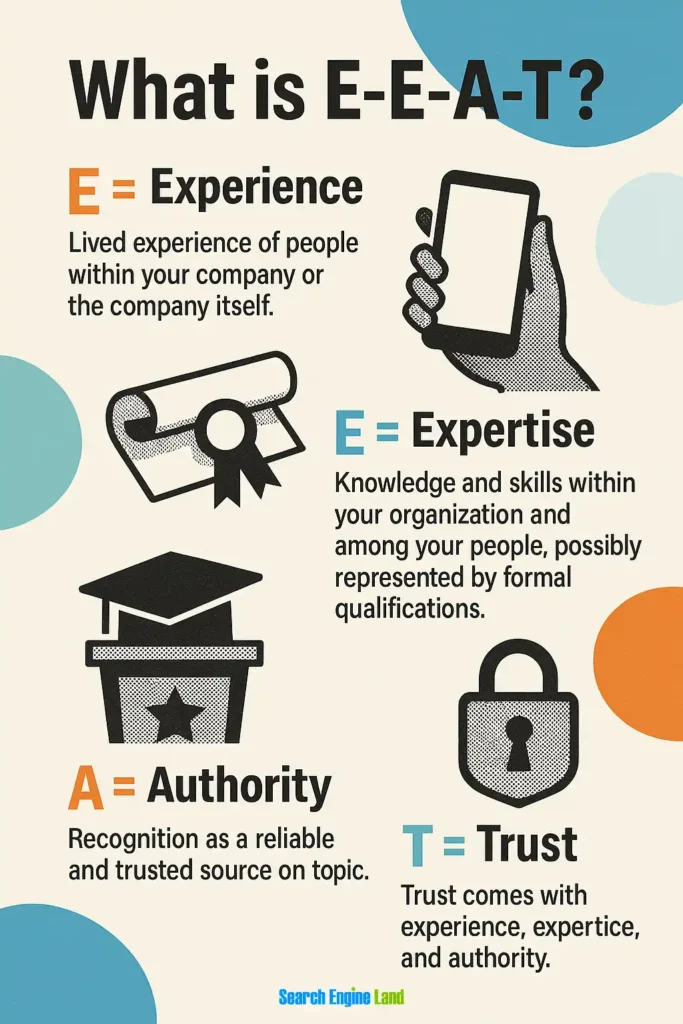
E-E-A-T is not a simple algorithm that you turn on or off to determine your ranking. Rather, it’s a framework that both human quality raters and Google algorithms themselves use to decide if the page should appear in search results for a particular query. And when the search environment is filled with AI overviews, chatbots, and generated content, mastering E-E-A-T is probably one of the most valuable skills you can develop to secure future visibility online.
This guide will walk you through what E-E-A-T is, how to implement it correctly, and what it does for your SEO efforts in general.
E-E-A-T Explained
Understanding where the criteria originated can be useful for build trust and authority in the eyes of Google. E-E-A-T is found in the Search Quality Rater Guidelines from Google which contains all the criteria that human raters use when evaluating whether the search results are truly helpful. Rather, it serves as a description of the signals which Google’s algorithms look for.
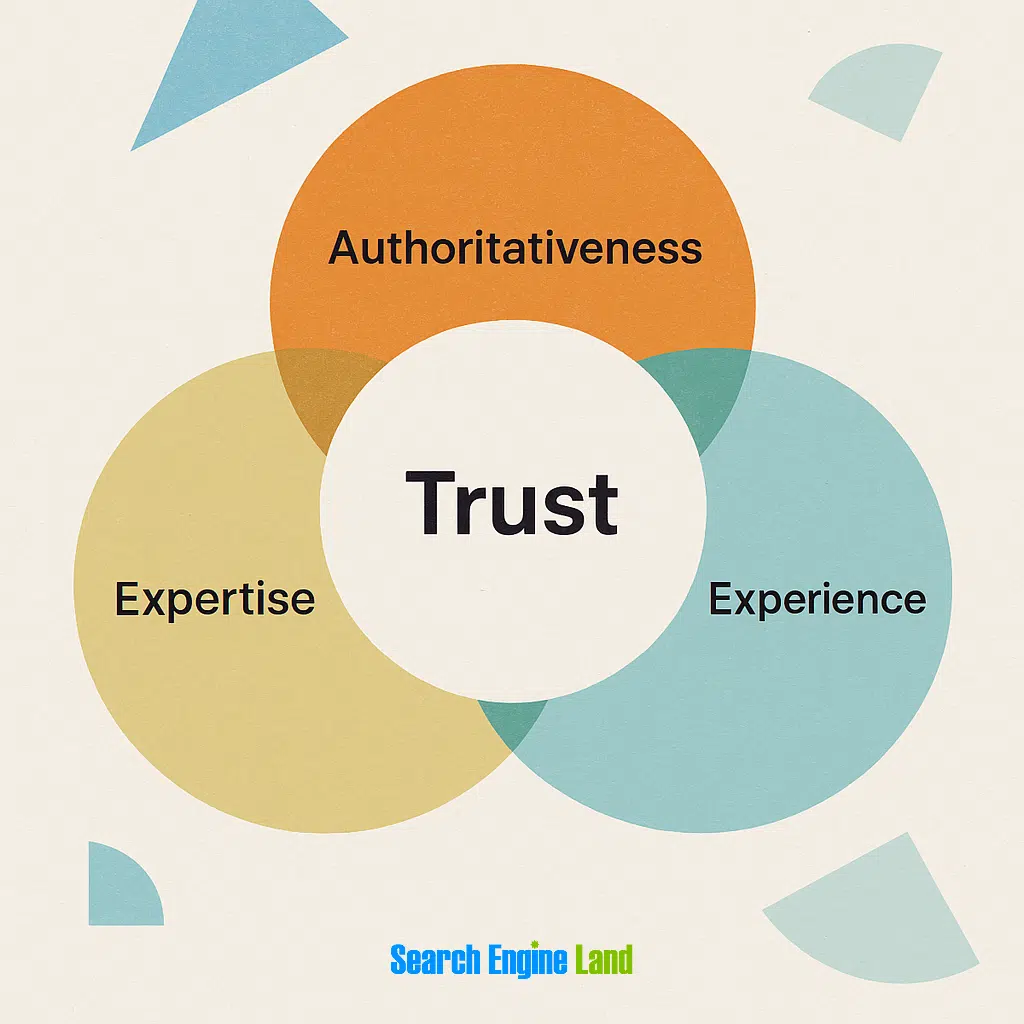
Among those four criteria, trust is at the very core. It depends on the other three, but it doesn’t mean that the page needs to score perfectly on all three categories to be ranked high – it just needs to gain the trust of its users.
Experience became the most recent element to be added to the model after Google realized that technically flawless writing is not sufficient in terms of build trust and authority. A research article written by an accredited author may fall behind in terms of credibility and trust when compared to a simple blog post written by a person who has actually had the experience.

Why E-E-A-T Will Be Important in 2026 Even More Than It Was Before
The need for build trust and authority became even more critical against the backdrop of changing the nature of search. AI Overviews have become a standard element of the upper part of many search engine results pages, pulling information directly from websites and quoting the sources where they found it. To be included into such an overview is one of the most valuable types of visibility possible nowadays – and those websites that get such visibility have something in common – they all have excellent E-E-A-T signals.
There is also the straightforward point that it is simply relevant because there is a plethora of AI-generated content available on the internet that is quick, inexpensive, and quite replaceable. Content that reflects experience, source materials, and an identifiable author is probably the best way to build trust and authority. Google’s own guidelines make it clear that the issue is not AI-assisted writing but low-effort, generic content. Good results may be achieved when the content generated using the AI tool is accurate and based on genuine expertise.
Websites that deal with the health, financial, and legal sectors – known as “Your Money or Your Life” or “YMYL” by Google – have the highest standards because false information in these fields can be quite dangerous. However, E-E-A-T does not apply only to the YMYL niche. Trustworthiness plays a role in all types of content, including cooking and B2B software websites.
How to Build Trust and Authority in a Sustainable Way: A Step-by-Step Guide
If you want to build trust and authority not just for the current Google algorithm update but in general, you will have to work on all of the above four factors systematically. How can you do that?
1. Prove Your Experience, Not Only Your Skills
The raters of Google are taught to evaluate whether the creator has practical experience in the area described in the content. You can prove that by using:
- Original photos, screenshots or videos instead of stock photos
- “The method we’ve tested”/”Our experience” section which describes the procedure you went through
- Case study written in the first person and featuring real numbers, timeline and results
- Both advantages and disadvantages of the method and the places where it did not work as expected
The more specific but imperfect your story is, the more trust it creates. The perfect and general story does not inspire much confidence.
2. Prove Your Expertise
Expertise goes deeper than confidence. Enhance it by doing the following things.
- Publish comprehensive guides on your site instead of superficial information
- Have the article reviewed or written by people who have knowledge in this particular subject
- Explain complex topics properly without oversimplifying them and turning them into inaccuracies
If you happen to have subject matter experts working in your company, let them know by providing their names with some credentials.
3. Earn Authority Outside Your Website
Authority is not an attribute one can apply to oneself but rather one that needs to be acknowledged by others. For build trust and authority in such manner, these acknowledgments come in form of:
- Backlinks and mentions from credible and relevant websites within your industry
- Contributions, interviews and quotations in credible publications
- Conducted research, data or studies published elsewhere
- Presence on credible sources and not random ones
The key point here is that authority should be earned through being recognized rather than promoted. A single strong backlink from a credible and relevant website will have more build trust and authority than a number of poor quality links.
4. Enhance Trust through Site-Level Signals
It is more than just what is written on your web page. Both Google and the users analyze:
- Clearly stated authorship and a visible “About” or “Contact” section
- Proper citation or source of facts presented on your site
- Up to date information where any out-of-date web pages are updated
- Fast-loading speed and secure website (HTTPS)
- Privacy policy and terms of service, especially if you have personal data stored on your website
- Real testimonials and reviews, not made up ones.
None of these factors by themselves ensures trustworthiness of the website, but all together they prove that its creators are responsible and accountable for what they do.
Errors That Work Against E-E-A-T
Attempting to build trust and authority in the wrong way can actually harm your efforts. Here are some errors to avoid making:
- Using E-E-A-T as a checklist trick- Credentials, bios, and backlinks won’t help much when the expertise is made up.
- Creating content with artificial intelligence and nothing else- The speed with which it’s generated undermines trust more than anything.
- Neglecting old content- Something accurate two years ago might now be out of date. Updating old content is an ongoing process of earning trust.
- Obsessing about quantity of backlinks rather than quality- Fewer links from genuinely reputable sites with relevant topical authority beats many from sites lacking authority.
- Neglecting search intent- Content that’s great for trust and authority but misses the mark on the question being asked fails nonetheless.
How Long Does it Take to build Trust and Authority?
However, there are no shortcuts, this is compounded work, not something that can be done once. Websites which produce content regularly and with accuracy tend to develop their authority steadily over a period of months rather than days. However, the good news is that this type of authority is strong – once you build trust and authority in the correct manner, it is likely to hold through changes to algorithms, since it does not rely on one specific ranking factor.
The Final Word:
It doesn’t matter if you have all of these methods firing away simultaneously. Instead, choose the pillar in which your website falls short and shore it up. Build trust and authority one page at a time by providing honest and thoroughly sourced information. The rest will come naturally after that.